Peaks of the Balkans trail is the best Balkans hiking adventure. Our experts design tours based on your travel date and other preferences. BNA can design an itinerary from 5 to 15 days of hiking. You can start and finish the hike in any of the countries: Albania, Kosovo, or Montenegro. Check our reviews on TripAdvisor.
The Financial Times has traveled with us. Watch the VIDEO or read the article of the Financial Times, when they visited Peaks of Balkans with Balkan Natural Adventure.
Go to our Booking Page ; Learn more about our guided tours see what is the best for you ; Learn more about our self guided tours from 5 to 10 days.
Or just scroll down for more general information
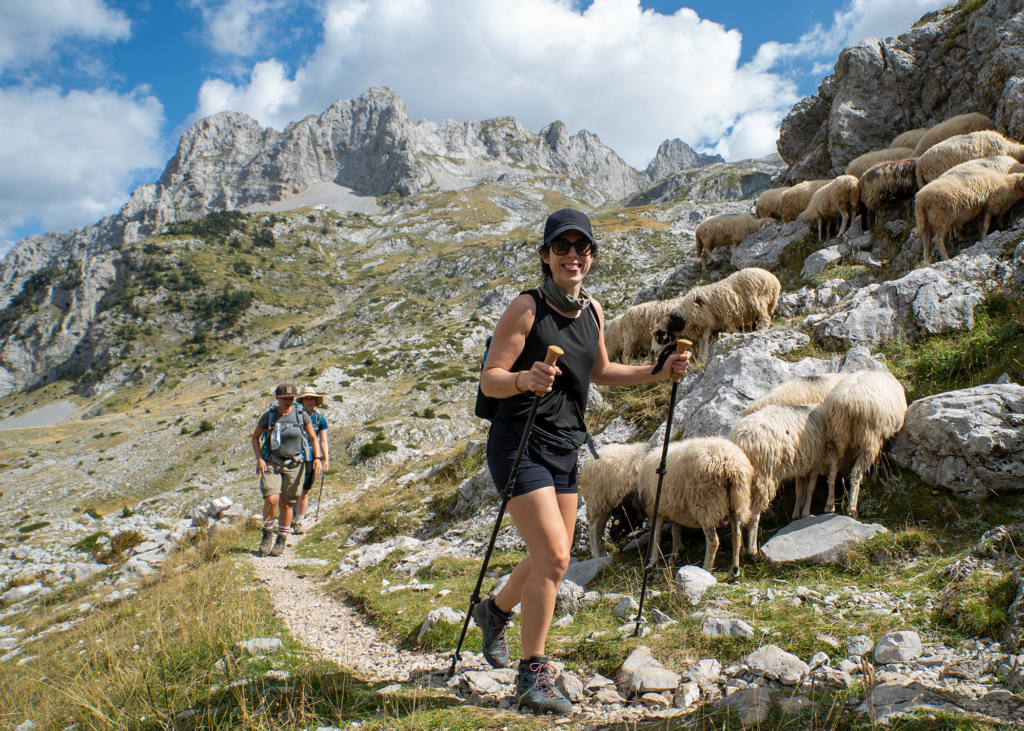
Peaks of the Balkans is one trail which has many viarations. This is the first long-distance trail designed in the Western Balkans. Originally, it was intended to span 192 kilometers, traversing Kosovo, Albania, and Montenegro. The original trail has changed due to rad development in the region and now it has many versions which you will find in this text.
The trail was crafted by local mountain enthusiasts and German experts, with funding from the German Development Agency GIZ.
The trail received the UN Tourism Award for Outstanding Destination Stewardship in the World Travel and Tourism Council’s (WTTC) Tourism for Tomorrow Awards. Former US President Bill Clinton presented the award in 2013, a year after the trail’s establishment.
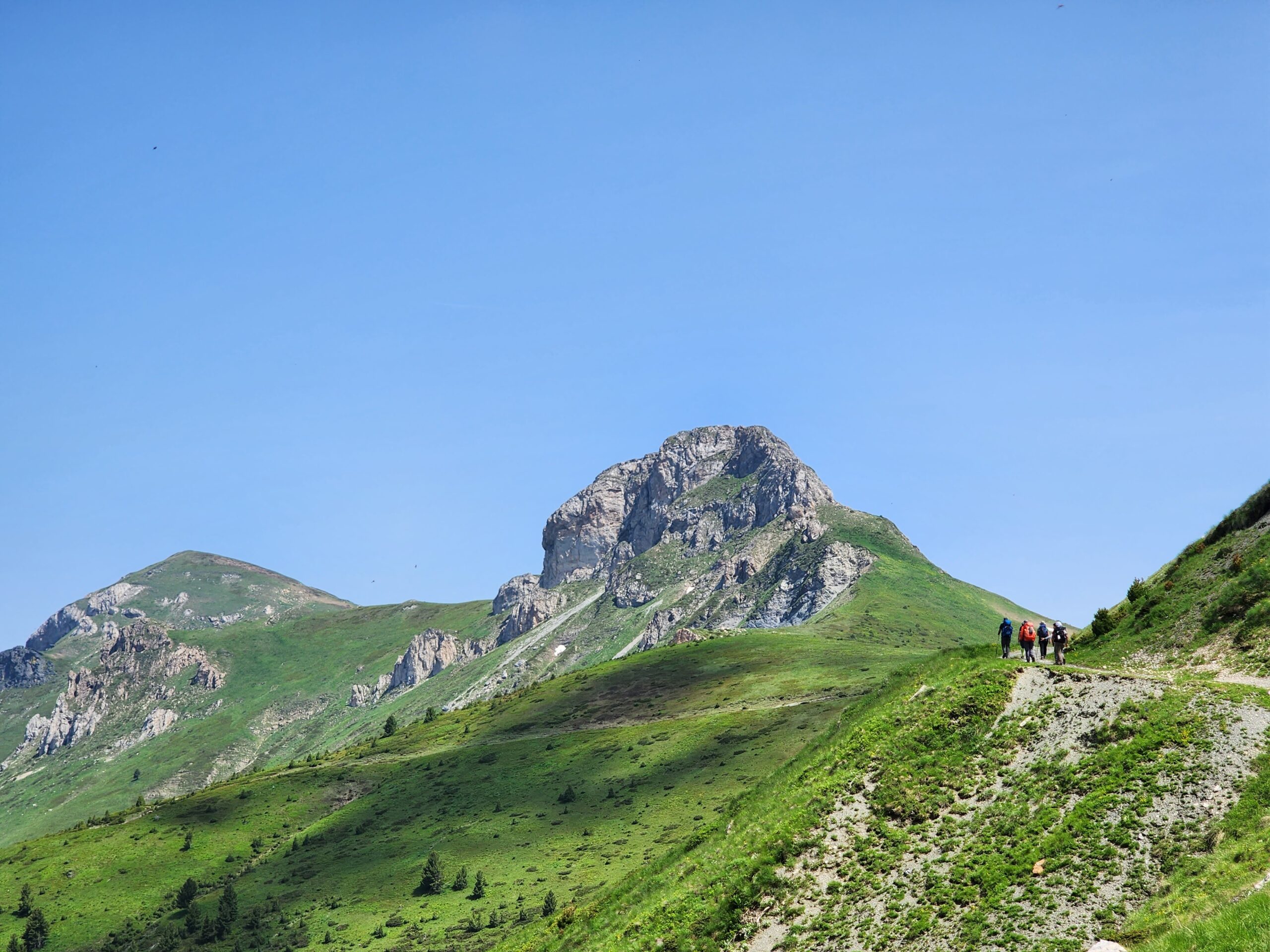
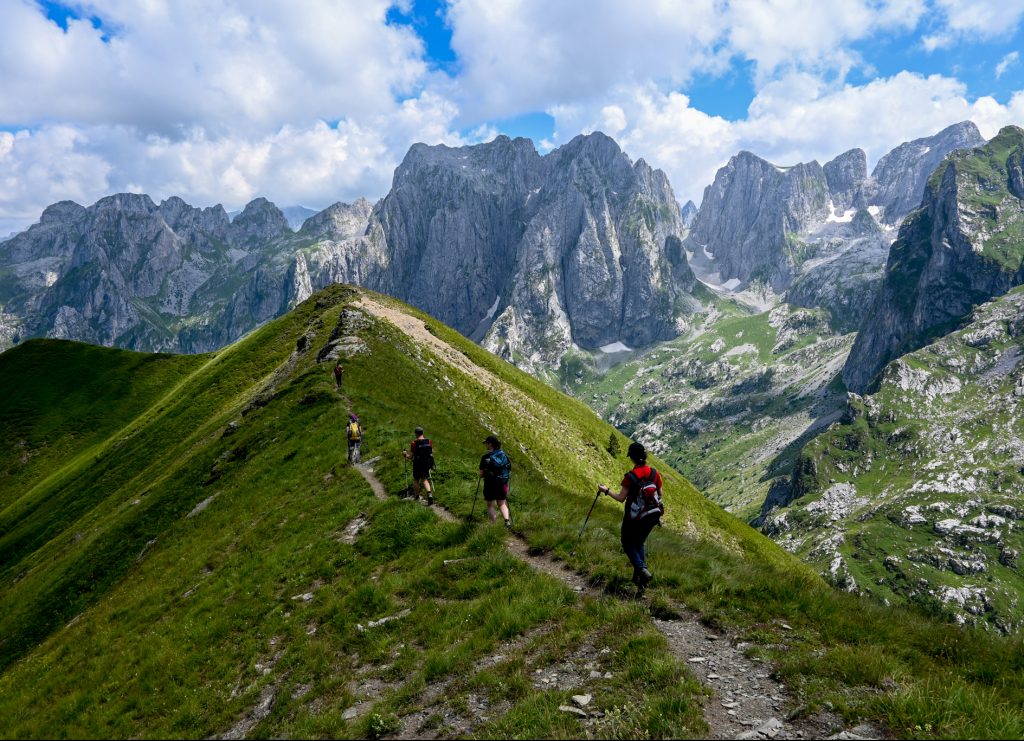
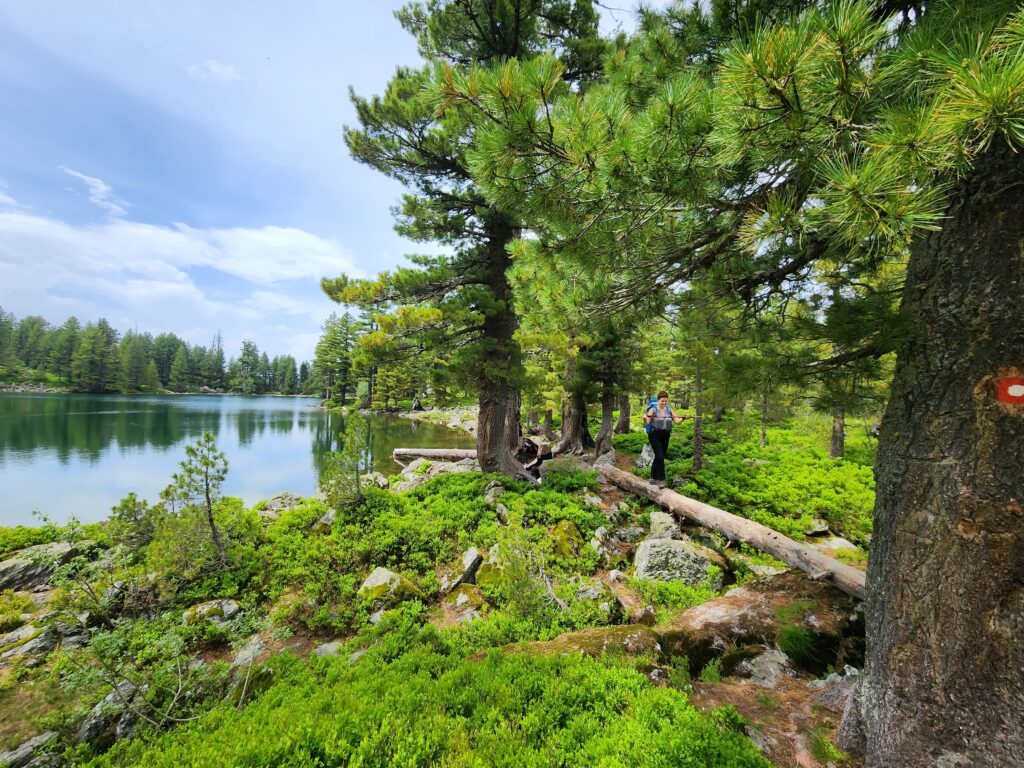
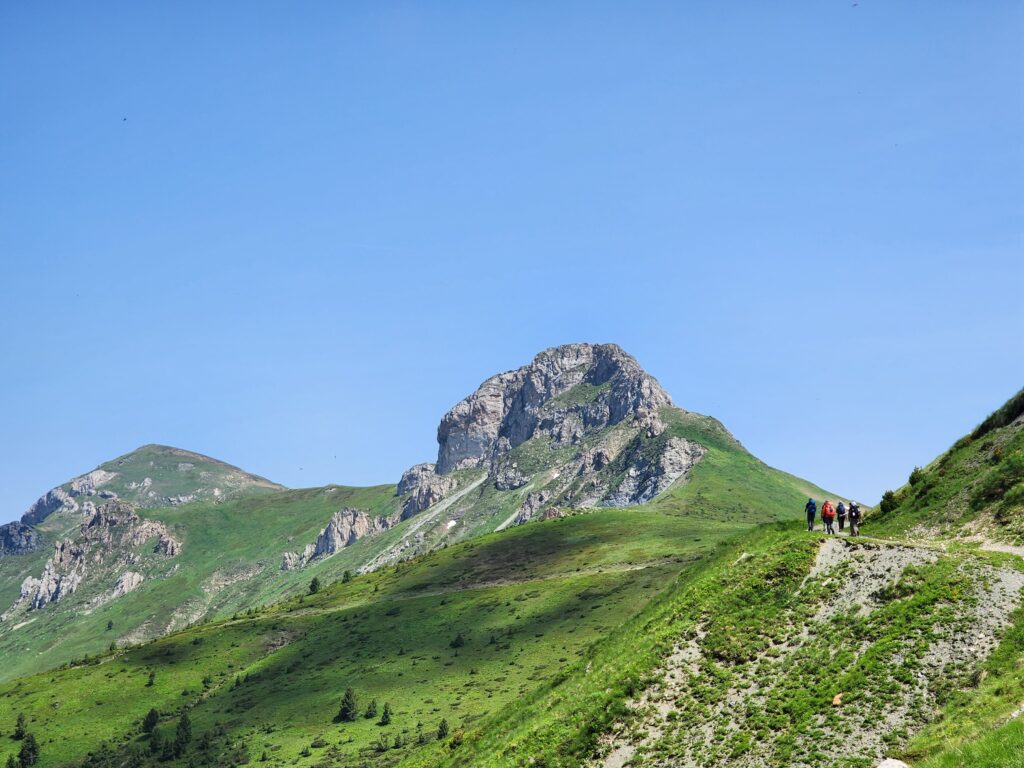
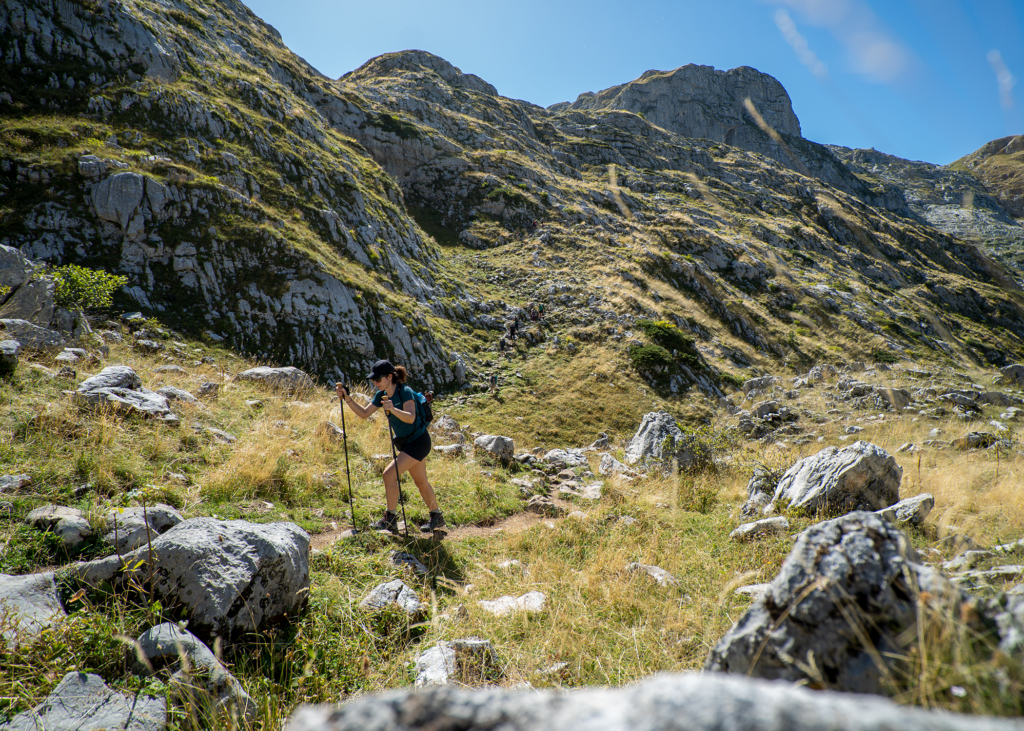
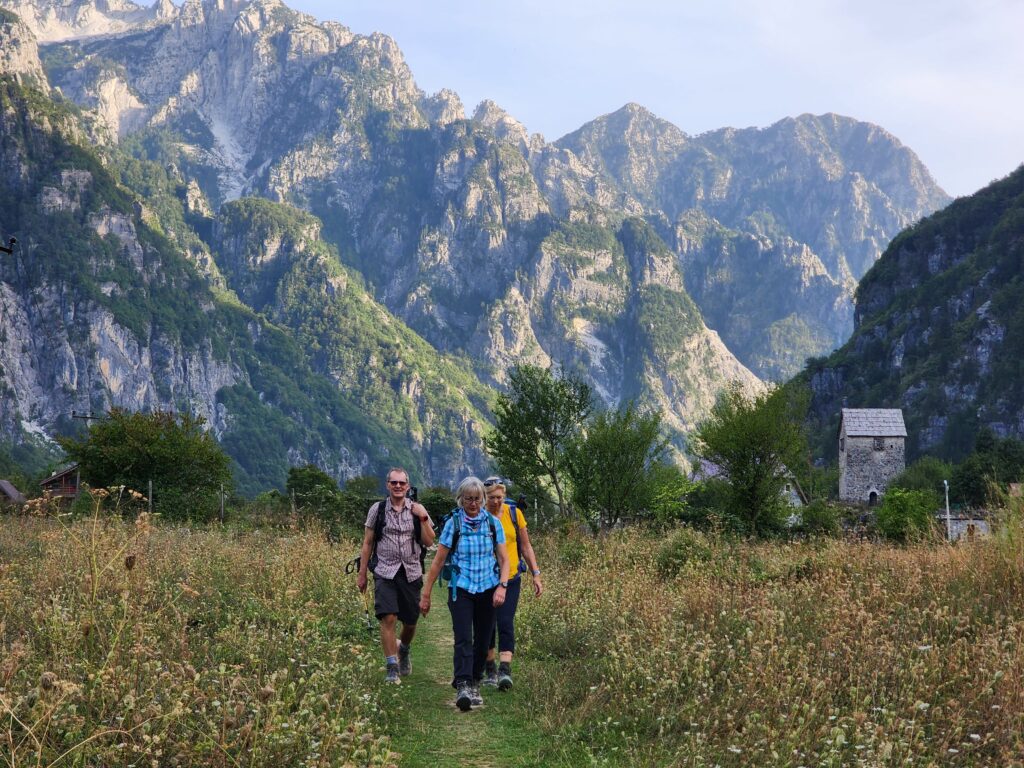
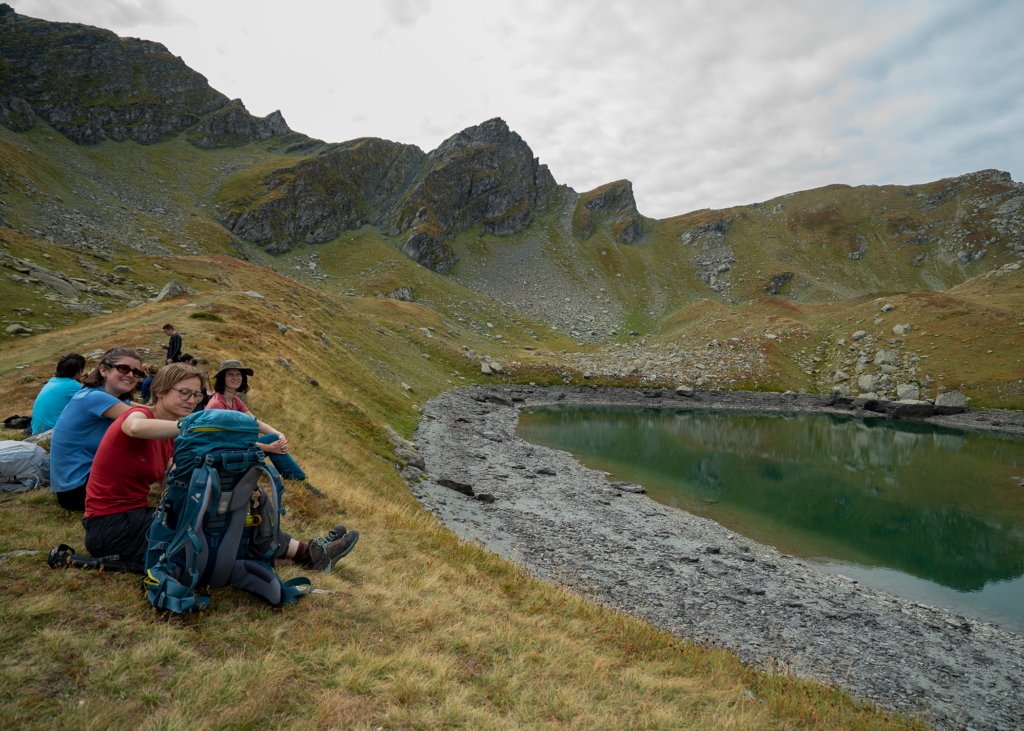
Hikers particularly appreciate the trail’s diversity in panoramas, people, and walking paths. The Accursed Mountains, though relatively small compared to the Himalayas or the European Alps, offer a variety of landscapes over short distances: woodlands, rocky mountains and peaks, valleys, and rich flora, making it a champion of diversity. The trail also traverses three countries with similar mentalities but different languages and religions. In Kosovo, one encounters Muslim Albanians, in Montenegro, Muslim Bosniaks and Orthodox Montenegrins, and in Albania, Catholic and Muslim Albanians, all sharing rakia with travelers.
The original trail has evolved, with new locations added and some segments shortened. The trail has many variations, and there is a comprehensive guidebook by Cicerone, which, unfortunately, contained some errors in its first publication.
This trail has received considerable publicity and has been covered by various media outlets. One of the first significant articles appeared in the New York Times in 2013 (Link to article), and later, the trail continued to receive attention, including a full-page feature in the weekend edition of The Financial Times (see article) Other notable publications covering Peaks of the Balkans include National Geographic, Evening Standard, and Süddeutsche Zeitung.
This region is very safe, with locals understanding the importance of tourism and safety for their economic well-being. Highland cultures in the area are known for their hospitality. In Northern Albania, welcoming guests is deeply ingrained in the culture, with guests often treated with near-sacred status. A character in Ismail Kadare’s book “Peaks of The Balkans” remarks, “For Albanians, after God comes the guest,” highlighting the local commitment to guest safety and security.
The trail is well-marked, though some parts can be challenging. It is advisable to use reliable GPS files to stay on track. While there is no official rescue team, search and rescue from Kosovo, the Albanian Army, and police are ready to respond quickly to reports of lost hikers or accidents.
Most accidents have occurred in early spring before the snow has melted. A section between Theth and Valbona can be dangerous if snow-covered. This can be circumvented by using an alternative route or spikes when crossing the narrow path.
Below is a brief description of the original trail details and variations:
Starting the Trail: The trail can be begun from any of the participating countries. The most accessible villages are Liqenat in Kosovo, Plav in Montenegro, and Theth in Albania. Your choice can be based on your flight or other travel arrangements.
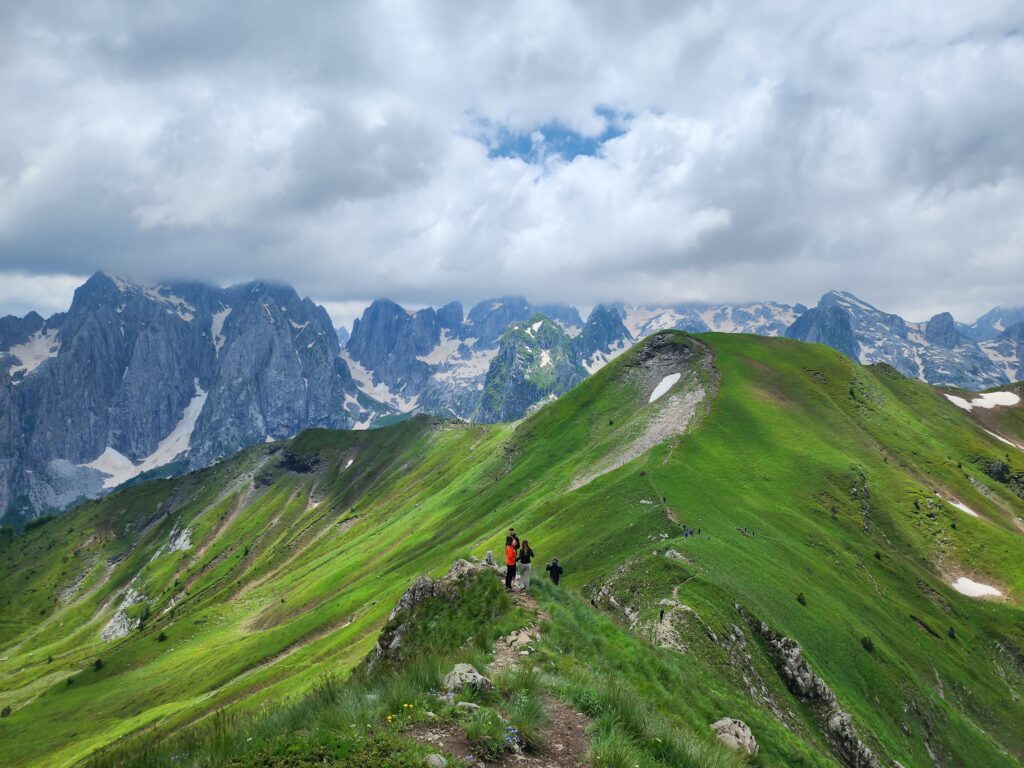
This segment offers views of two valleys, Shala and Kelmendi, and includes the most southern glacier in the Northern Hemisphere, located in Albania. The path connects Theth (Thethi Guide), a predominantly Catholic Albanian village, with the Valbona valley. Both offer stunning views and a great hike. This section has become busier in recent years, as many tourists opt for this hike alone.
In early spring, when the snow is not yet melted, a lower trail should be taken to avoid accidents. In 2023, there were two fatalities due to snow and people slipping into abysses. Without snow, this path is technically easy.
Trail distance:
16.4 kilometers (Thethi church to Guesthouse Kol Gjoni)
Elevation min: 730 meters; max 1854 meters
Cumulative height uphill: 1175 meters; downhill: 940meters
Difficulty level: ● moderate
Time: 7 hours
The original Valbona-Cerem trail is now seldom used. It partially followed a tractor road, rarely used by vehicles. With the trail’s growing popularity, this has become a busy route with operators transporting tourists’ luggage. Consequently, guides and operators have created a new trail next to Kollata e Madhe or Zla Kolata, Montenegro’s highest peak. This trail is challenging, with a very steep section, but the beauty and views are rewarding. More experienced hikers also tackle the Kollata peak.
Trail distance:
15.5 kilometers
Elevation min: 1215 meters, max 2039 meters
Cumulative height uphill: 1215 meters downhill: 1005 meters
Difficulty level: ● moderate
Time: 8-9 hours
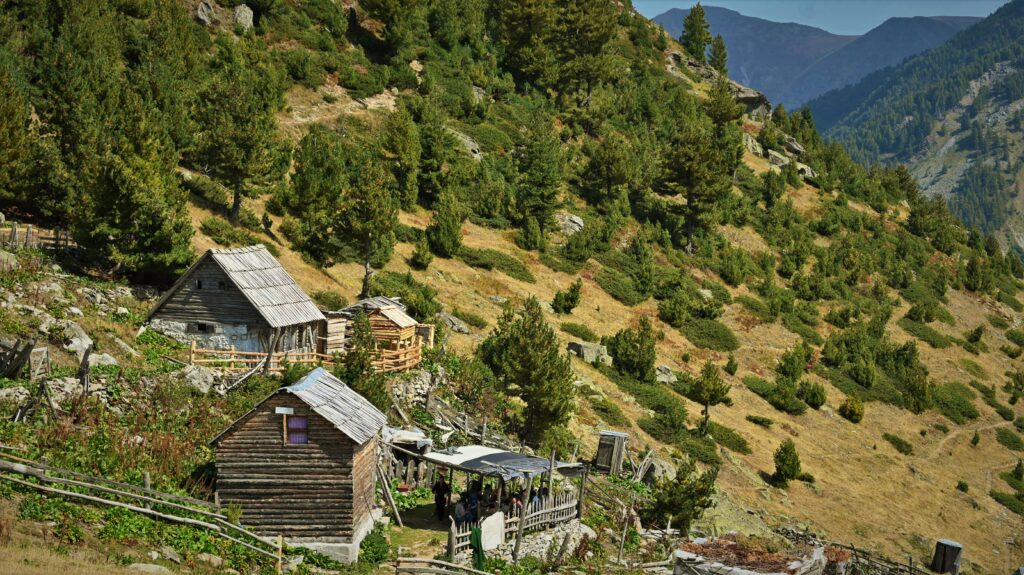
This segment is one of the most secluded on the trail, primarily hiked by those completing the entire route. It’s very beautiful and passes through a small village, offering a chance for a hearty lunch from local shepherds. This trail has remained unchanged since its establishment and takes you past primeval forests. In spring and summer, the blooming vegetation and endless valley views are breathtaking. The Gashi valley, a strictly protected zone where hikers are not allowed, can also be seen from here. You will get to Doberdol (See the video of Guest House Leonardi i Doberdol) which is the highest place you will sleep during the hike.
Trail distance:
16.8 kilometers
Elevation min: 1180 meters, max 1920 meters
Cumulative height uphill: 1100 meters downhill: 520 meters
Difficulty level: ● moderate
Time: 6 hours
This trail, linking Albania to Kosovo, hasn’t undergone significant changes over the years. A highlight is the three-border peak, where the three countries meet. The trail offers long walks along mountain crests with open views. This is when you will go from Albania to Kosovo in Milishevc or in Zlanopoje as some know it (See the video of guest house). On the Kosovo side, there’s a failed road project that has damaged the wildreness.
Trail distance:
17.6 kilometers
Elevation min: 1535 meters, max 2250 meters
Cumulative height uphill: 970 meters downhill: 1075 meters
Difficulty level: ● moderate
Time: 8-9 hours
The Doberdol trail is also a starting point for other routes. One recommended option is to climb Mount Gjeravica, Kosovo’s highest peak, and return to Doberdol in a loop. This hike passes glacial lakes and offers wonderful views of the Accursed Mountains. However, it can be challenging in bad weather. Another option from Gjeravica is to head to Bjeshka Gacaferit, where a new guesthouse has opened.
Trail distance:
19 kilometers (round-trip)
Elevation min: 1765 meters, max 2656 meters
Cumulative height uphill: 1134 meters downhill: 1130 meters
Difficulty level: ● moderate
Time: 8-9 hours
Another variation from Doberdol is to head directly to Bjeshka e Gacaferit without going to Gjeravica. This shortens the hike and provides a welcome break from the previous challenging segments.After a night in this location you will continue joining the clasical Peaks of the Balkans trail and joining the Doberdol-Milishevc trail in Bjeshka e Dobroshit.
This original segment offers beautiful views of the Rugova Canyon as it passes near Guri Kuq peak. However, since part of the trail is now asphalted, many hikers avoid linking fully Milishevc with Reka e Allages. In some versions designed by Balkan Natural Adventure, you avoid three days and add other hikes, by going from Milishevc to Babino Polje.
Trail distance:
17.4 kilometers
Elevation min: 900 meters, max 2143 meters
Cumulative height uphill: 1128 meters downhill: 1503 meters
Difficulty level: ● moderate
Time: 8-9 hours
Optional: (Car Transfer to Reka Allages)
This hike passes through the other side of the river Lumbardhi, and it passes through many a village in the region. It trails through Rugova mountains, home to some of the most populated highland villages in the Kosovo’s part of the Accursed Mountains. The hike goes from Nikqi tribe to Shala in Drelaj and Kuqishte. As foreseen originally this trail now goes through a lot of asphalted roads, and some walks which would not be hikes. To avoid this is either to change the trail altogether or to take some transfers. One of the options is to finish the hike in Drelaj and take a transfer the next day to Kuqishte. Otherwise you can take a transfer the day of the hike. One detour to do this hike is add Hajla climb in it and get amazing views from the highest peak in this part of the mountain.
Trail distance:
21.8 kilometers
Elevation min: 1075 meters, max 1810 meters
Cumulative height uphill: 1340 meters downhill: 1235 meters
Difficulty level: ● moderate
Time: 8-9 hours
Optional: (Car Transfer Drelaj to Leqinat Guri Kuq 20 minutes: 10 kilometers)
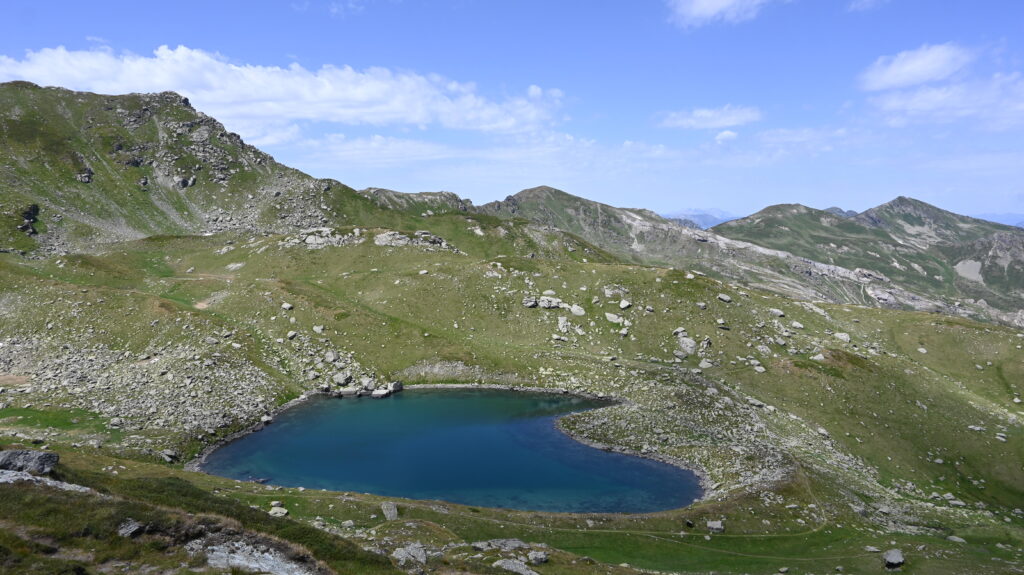
This trail, as originally planned, is now rarely completed without transport due to new roads. From Kuqishte to Liqenat, the path is asphalted and best traveled by car, as noted before. The hike from Liqenat to Babino Polje in Montenegro is beautiful and it includes two glacial lakes at 1800 meters of altitude. With the trail of Balkan Natural Adventure the glecial lakes are included in the hike from Milishevc to Babino Polje. This trail takes you to Montenegro.
Trail distance:
15.1 kilometers
Elevation min: 1420 meters, max 2275 meters
Cumulative height uphill: 1147 meters downhill: 1049 meters
Difficulty level: ● moderate
Time: 7-8 hours
This two-part trail includes a beautiful segment to Hrid lake. However, the path from Hrid lake to Plav, passing through Treskovica, is partly on a tractor road, which can be unpleasant due to dust from passing vehicles. This part can be avoided by inclusion of a 7 k transfer from Gradina to Plav.
Trail distance:
15 kilometers
Elevation min: 1215 meters, max 2060 meters
Cumulative height uphill: 600 meters downhill: 955 meters
Difficulty level: ● moderate
Time: 5-6 hours
Optional: (Car transfer from settlement Gradina to Plav 15 minutes: 7 kilometers)
The option that Balkan Natural Adventure suggests is to take a transfer from Babino polje to do a hike outside the classical trail to the Grbaje valley. This hike will take you what was supposed to be the most beautiful valley in all Yugoslavia, when the countru existed from Slovenia to Macedonia. This was left out from the original trail as it includes a transfer, however we believe that the view and the hike totally is worth the detour.
BABINO POLJE, Montenegro – GREBAJE VALLEY LOOP, Montenegro – VUTHAJ/VUSANJE Montenegro
Trail distance:
9.5 kilometers (loop trail)
Elevation min: 1140 meters, max 2057 meters
Cumulative height uphill: 1100 meters downhill: 995 meters
Difficulty level: ● moderate
Time: 5-6 hour
Note: 1st Car transfer from Babino Polje to Grebaje Valley 1hr distance 31km – Beginning of the journey.
This segment passes through Plav town, then moves to rural areas and higher hills. It lacks particular highlights, and many people skip it. Instead, consider other hikes mentioned previously, such as in Gjeravica, or other visits. However if you decide to do this hike ot will take you to Bor peak to get a view on the town. The trail can be shortened with a transfer from Plav to the place called Karaulla.
Trail distance:
14 kilometers
Elevation min: 990 meters, max 2100 meters
Cumulative height uphill: 620 meters downhill: 1160 meters
Difficulty level: ● moderate
Time: 10-11 hours
Optional: (Car Transfer from Plav to Karaula point 20 minutes: 8 kilometers)
This epic hike from Vusanje or Vuthaj to Theth traverses rugged paths dotted with bunkers, starting and ending in green meadows. It is one of the hikes that has not changed and it does not need transfers to avoid asphalt. As the trail between Valbona and Theth is more crowded, this might be the best segment of the entire hike. It’s also the longest but can be shortened with transfers.
Trail distance:
17.1 kilometers
Elevation min: 730 meters, max 1745 meters
Cumulative height uphill: 795 meters downhill: 1250 meters
Difficulty level: ● moderate
Time: 8 hours
Please click on seperate sections of the trail to have a short description. The green trails are those added by Balkan Natural Adventure for a better experience of the trail.
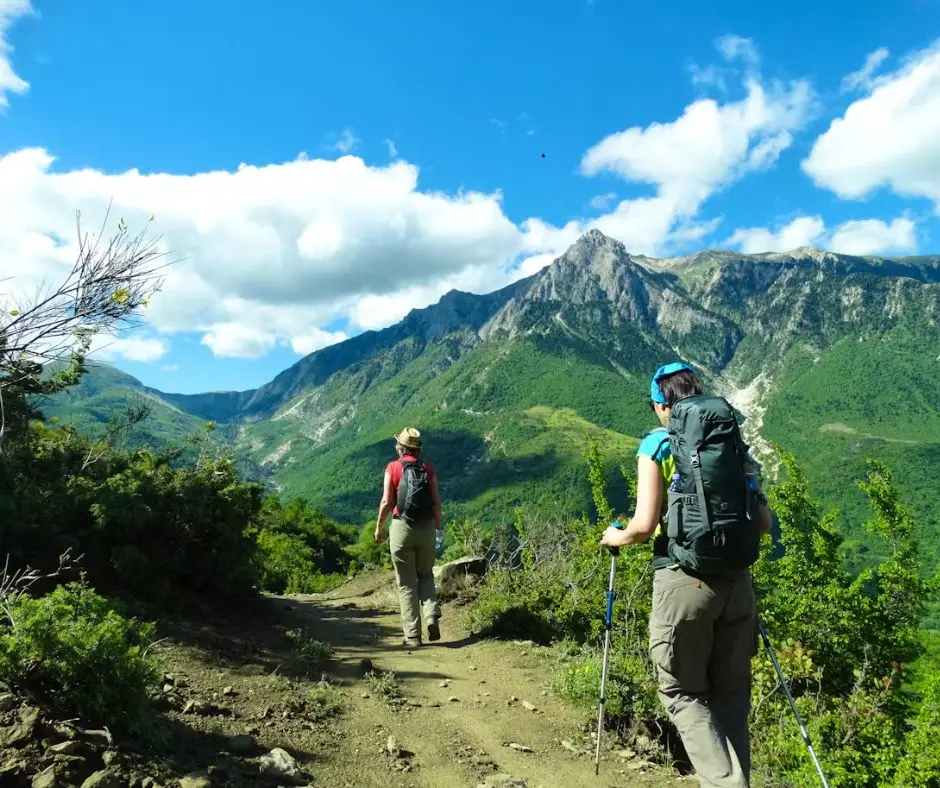
Join our groups in this spectacular hike in the accursed mountains. Best guide to guest ratio, smaller groups, fast and reliable office support, in depth local knowledge.
Book Now – € 980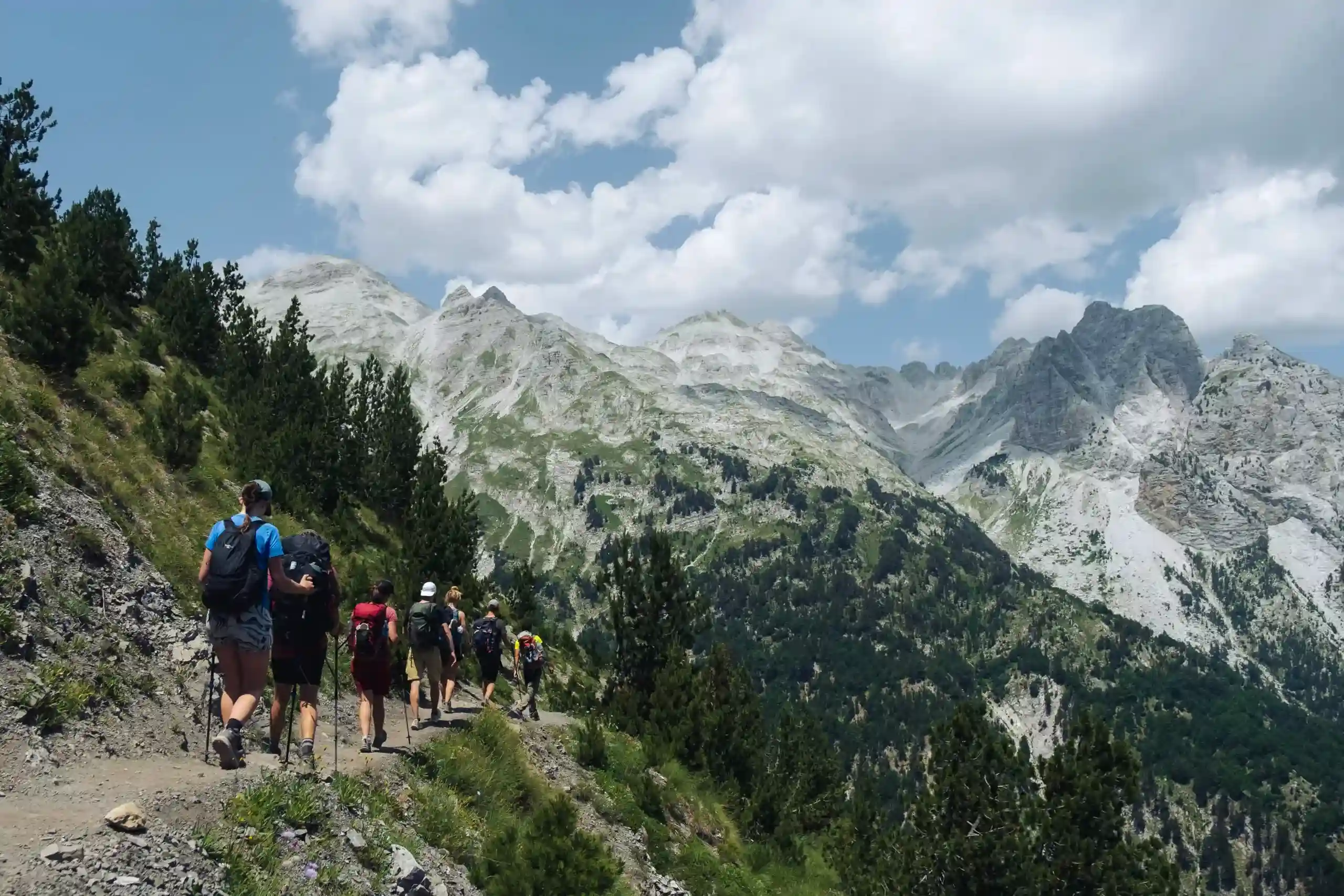
This is a week-long, 6-day guided trip in the Peaks of the Balkans. The itinerary has been carefully adjusted to include the best parts of the trip itself, comfortably planned.
Book Now – € 765
Come along on a delightful 6-day journey through the Peaks of the Balkans.
Book Now – € 595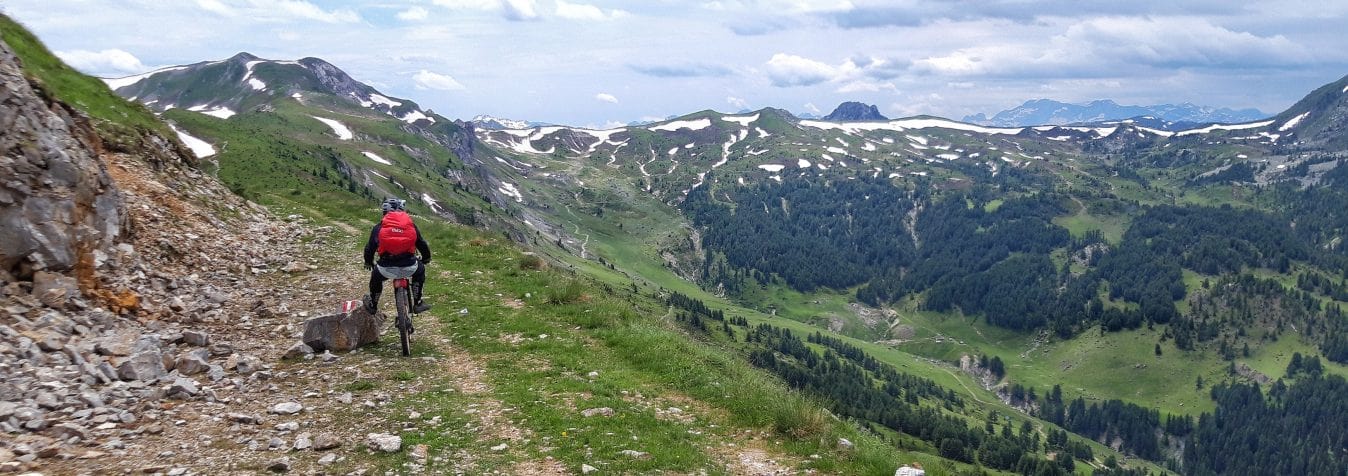
Peaks of the Balkans biking tour If you are in search of a mountain biking trip, join us, and soak in the idyllic beauty of breathtaking.
Book Now – € 650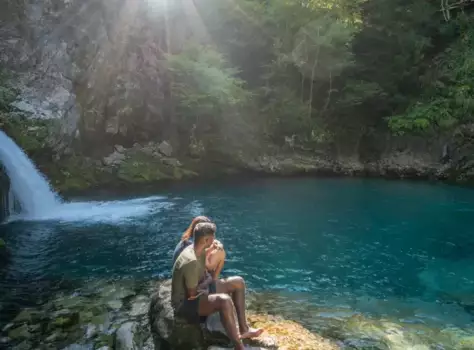
This is the shortest and most affordable self-guided tour in the Balkan Peaks, however it offers a lot packed properly by professionals.
Book Now – 540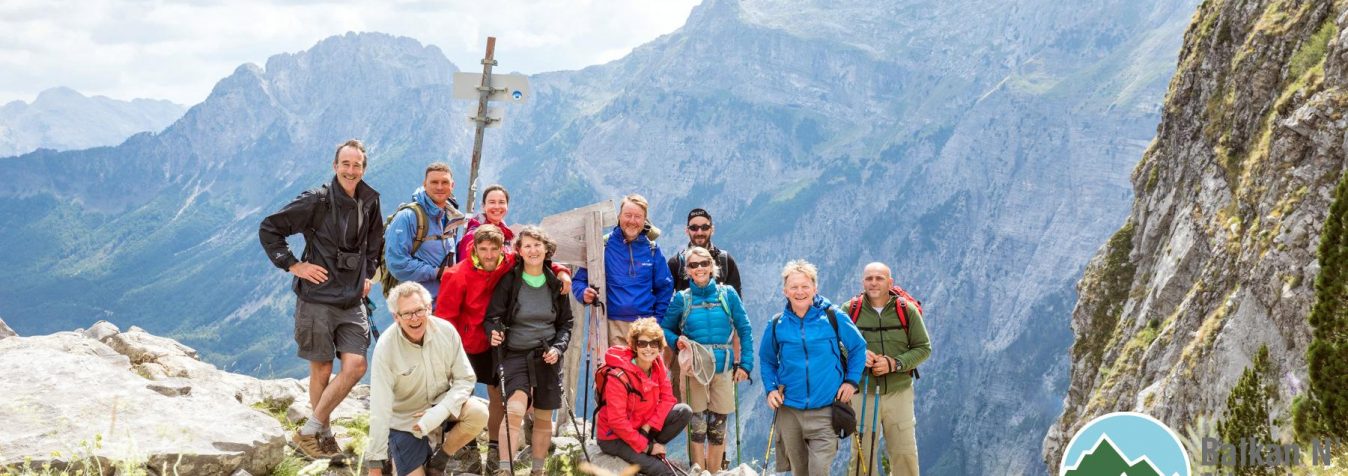
Get a taste of the Accursed Mountains in your longer trip in the region.
Transfers
Transfers during the tour will be private for the group. The private transfer is done by either regular car or 4×4, depending on the road conditions. On the trail, shortcut transfers can be arranged for the trails that are distant or to skip asphalt road segments.
The food in this part of the world will be something you will eagerly anticipate at the end of each day. Food is freshly cooked in a traditional manner and has a mix of Balkan, Turkish, and European influences. At the guesthouses, the breakfasts are simple, homemade bread with locally grown vegetables, dairy products, and eggs. Dinners include traditional soups, meat dishes, vegetables, and pies. Guesthouses also will provide you with a packed lunch – often including a sandwich with cheese and vegetables.
Vegetarianism and diets will not be a problem as the homestay families can provide alternatives. However, the choices are basic and limited.
Consider bringing your water bottle to refill along the way. You can get water from mountain streams or in guesthouses tap water as this is also drinkable water. However, if you are concerned about drinking untreated water, we recommend you take water treatment tablets with you.
The accommodation is in a simple homestay/guesthouse/lodge-style with simple bathroom facilities. Rooms are likely to accommodate between two to five people per room and it may be necessary for male and female groups to share the room unless noted otherwise on your request, but not guaranteed in each guesthouse. It always depends on the availability of rooms.
Sheets and blankets, towels, shampoo, warm water, and other basic services are provided, but we recommend packing a travel towel and sleep sack just in case.
Private rooms at an additional cost; limited availability.
Recommended readings for the region
– The novel called “Broken April” by Ismail Kadare is situated in these mountains. A read before the trip will increase the experience that this trip offers
– Edith Durham – High Albania
Other Info
– Time zone: GMT +1
– Language: Albanian, in Kosovo and Albania, Serbian/Montenegrin in Montenegro. In big cities, many people speak English, but in remote areas, this might not be the case. A lot of people may speak also German due to the large diaspora in Germano-phone countries.
– Electric supply and plugs: 220V, 50 Hz, two-pin round plugs.
– Currency: Euro (EUR) in Kosovo and Montenegro, Lek in Albania, however, you can use Euro freely. Credit cards and Cash machines are available in Peja, Plav, and Gjakova.
– Cost of living: in the region is much cheaper than in Western Europe. Some sample prices follow:
A 3-course meal in a standard restaurant: EUR 7-10 pp
A flask of mineral water from a street shop: EUR 0.5
A cup of coffee: EUR 0.5 – 2
Contact us for your booking at anila@bnadventure.com or virtyt@bnadventure.com, or just use the chat form.
Booking Page – More about guided tours – More about self guided tours

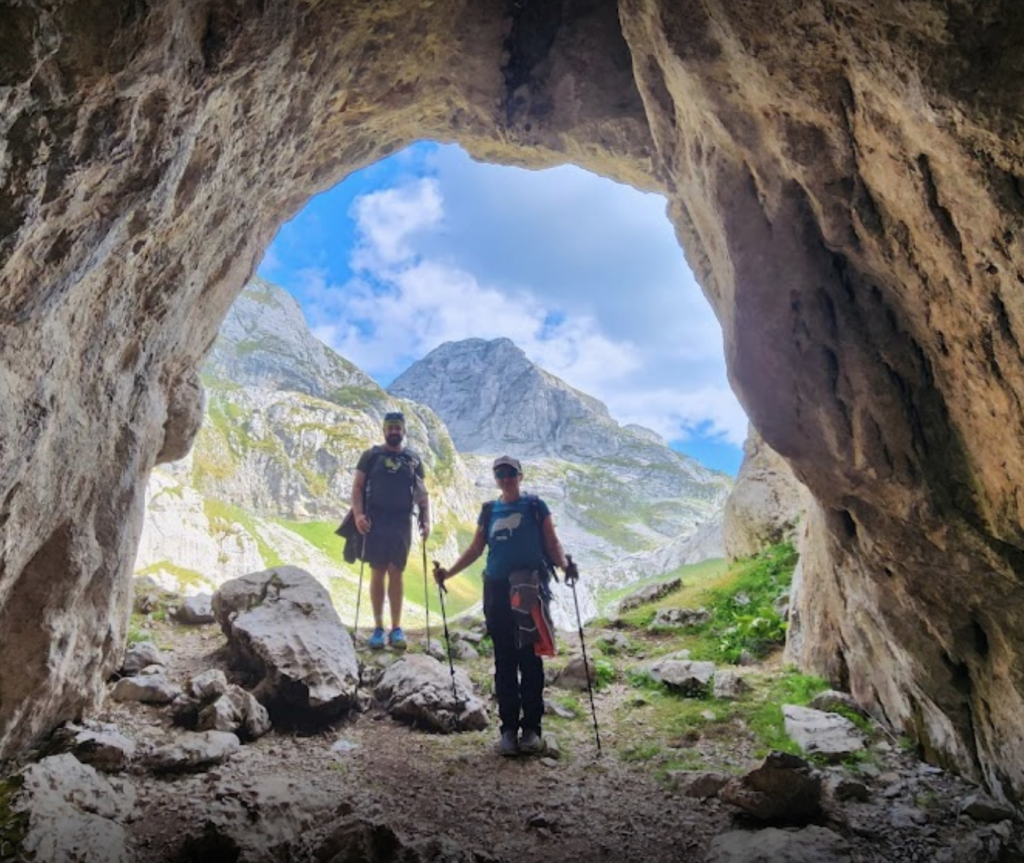
ITINERARY SAMPLE
We have designed this itinerary for a 7-day vacation flying to Pristina.
Day 1: Flight in Pristina (Kosovo). Transfer to Reka e Allages
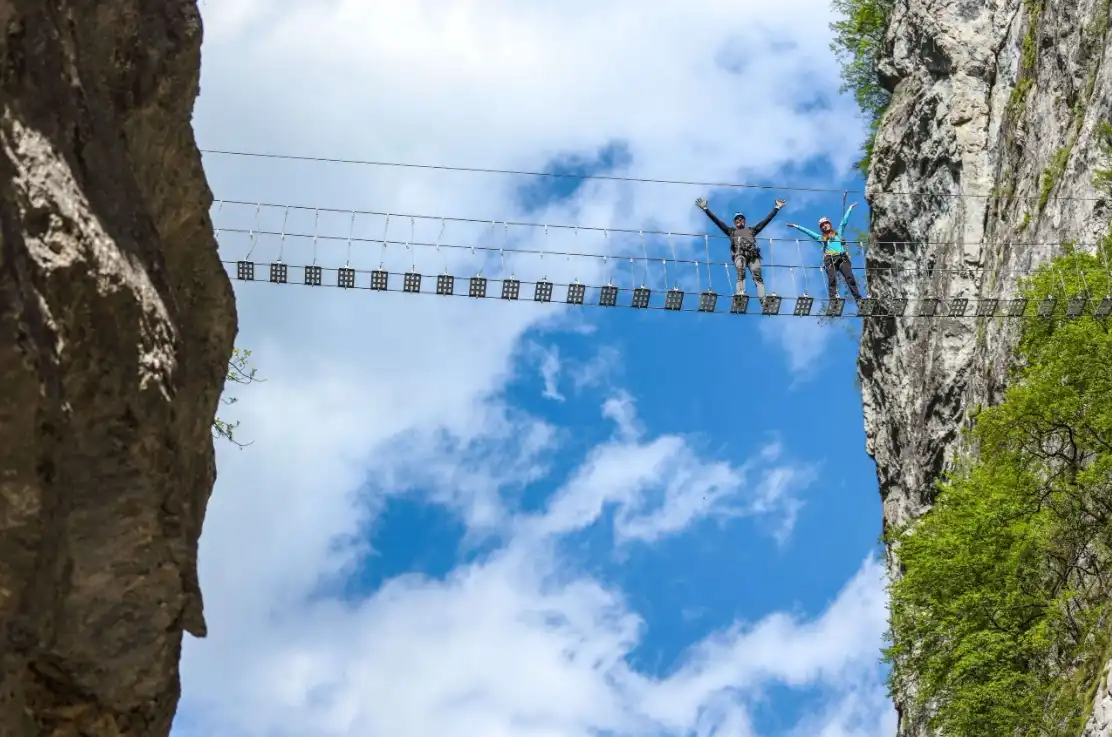
The first day of your trip will begin with a bit of culture. We will introduce you to Peja’s historic sites, including the UNESCO-protected Patriarchate of Peja – a medieval Orthodox monastery. You can always add a Via Ferrata trip to your itinerary before you enter the mountains. After lunch, you will be transferred to the village of Reka e Allages in Rugova Canyon to prepare for your mountain journey. Mustafe Nikqi will greet you upon your arrival, welcoming you to his guesthouse, Ari, your home for the evening. You can also do a small hike and enjoy Archery
Day 2: Reka e Allakes – Drelaj
Today you begin your Peaks of the Balkans trail with an easy 10.1-kilometer hike to the village of Drelaj. This beautiful stretch will give you further insight into mountain life in Kosovo. You will pass several more villages along the way. This will not be a too long day. Thus you can add climbing Hajla peak to the hike. This decision can be taken while walking in consultation with your guide. Upon our arrival in Drelaj, we will stay with the family of Osman Shala. At guest house Shqiponja. You can also extend your hike and climb Hajla Mountain. This is how you will pocket the first peak in the Balkan hiking adventure.
Day 3: Drelaj – Kuqishte – Babino Polje, Montenegro
This day will begin with a car transfer to the village of Kuqishte to avoid asphalt walking. You will begin your first border crossing of the Peaks of the Balkans over into Montenegro. This intense 15.8-kilometer hike offers some of the region’s most breathtaking views, passing several glacial lakes and water sources. Some decide to divide this hike into two parts: a 7.4-kilometer ascent on the first day and 8.4-kilometer descent on the second. There are no villages or accommodation facilities between Guri i Kuq and Babino Polje. However, you can camp. BNA suggests giving a push to the hike and finishing this in one day, as the carrying of tents will make it more difficult for the trip.
Day 4: Babino Polje – Vusanje – Theth, Albania
If you decide to take the cross-border hike to Babino Polje in one day, you will have another long cross-border trek from Montenegro to Albania. We will provide a transfer by car from Babino Polje to Vuthaj. In Ropojane you will begin the 21-kilometer hike to the historic Albanian village of Theth. The path passes along the craggiest part of the Prokletje/Albanian Alps, which was a forbidden zone during the Communist era. In addition to the dramatic cliffs that form the backdrop for the day’s hike, you will also see a military bunker built during communism. This Peaks of the Balkans trail finishes in the remote village of Theth, which is famous for stone houses. We will stay in one with a local family. When hiking this trail you can also climb Mount Arapi or the Albanian Matterhorn.
Day 5: Theth, Albania
Today you can either finish the cross-border hike or spend the entire day in the picturesque village of Theth. We can arrange for small hikes around the village based on demand. Among highlights, there are naturally created ‘bathtubs’ in the river of Shala. Theth is the most beautiful village in the Peaks of the Balkans trail. An additional day will add culture and “chilling” to this Balkan hiking adventure.
Day 6: Theth – Valbone – Gjakova
Today you will do one of Albania’s most iconic hikes from Theth over the Valbona Pass to the town of Valbona (995 m). This trail runs in the heart of the eponymous national park. This 14-kilometer route follows the path of an ancient mule track linking the tribal regions of Shala and Nikaj. The hike goes through a narrow crest that gives a view of both the valleys and the most southern glacier in the world. After a difficult ascent, you will walk slowly on the track to get to the village of Valbona. (Horses available)
Day 7: Gjakova – Peja – Prishtina
Your Peaks of the Balkans journey will end in Kosovo, where it began. Today, you will tour a few more gems of Western Kosovo: Gjakova’s Hadumi Mosque, which was built in 1594 and boasts state-of-the-art acoustics for the time, as well as the UNESCO Heritage Site, Deçan Monastery. You will have lunch in Peja before being transferred to Prishtina to catch your flight.




Balkan Natural Aventure is leading tour oprator in the region. We were featured to major newspapers and hold a partner status with travelife certifier.
Links
Destinations
Locations
Balkan Natural Adventure Sh.P.K
Edit Durham, nr 7
30000 Peje, Republic of Kosovo
Balkan Natural Adventure Albania
Rr. Milto Tutulani nr 26/8
1010 Tirana, Albania