A complete guide to hiking, culture, nature, and life in one of Albania’s most iconic mountain villages.
Theth has emerged as one of Albania’s most remarkable mountain destinations. Known for its iconic Catholic church, dramatic limestone peaks, and the crystal-clear Shala River, the village has expanded its capacity for tourism while carefully preserving authentic alpine architecture and hospitality.
Travel writer Edith Durham, visiting in the early 1900s, famously wrote:
“I think no place where human beings live has given me such an impression of majestic isolation from all the world.”
More than a century later, that feeling remains intact.
Today Theth is a living example of rural revival: a village nearly abandoned during the years of intense migration, now revitalized thanks to sustainable tourism and its position on major hiking routes such as the Peaks of the Balkans.
The village sits strategically between Valbonë and Çerem, making it a popular stop for long-distance trekkers.
Theth and the Shala Valley have inspired some of the most influential foreign and Albanian writers of the last century.
Durham’s journeys through Shala and Theth captured Europe’s imagination. Her portrayal of the village — isolated, proud, deeply traditional — remains the most quoted description of the region.
The early American writer described the Peaks of Shala as
“stone towers rising from the earth, untouched by time.”
Her fascination with the independence of the northern highlanders helped introduce Albania to readers in the United States.
Albania’s greatest novelist returned repeatedly to the psychological landscape of the northern mountains — the Kanun, blood feuds, honor, and the dramatic world of the highlanders. Though Theth is not always named explicitly, Kadare’s depictions echo the very environment visitors encounter there.
Den Doolaard’s Balkan travel writings praised the raw power of the northern Albanian Alps and the resilience of the mountain people. To Dutch readers, his works offered one of the earliest European portrayals of Shala as a remote, culturally rich wilderness.
Together, these authors have shaped how the world imagines Theth — a place of legend, hospitality, and ancient traditions preserved against all odds.
Theth is a remote mountain village in northern Albania and part of the municipality of Shkodër. It was declared a Protected Historic Center and lies within Theth National Park (established 1966).
Local tradition traces its population to a common ancestor (Ded Nika), with families allegedly settling here 300–350 years ago to preserve their Roman Catholic identity.
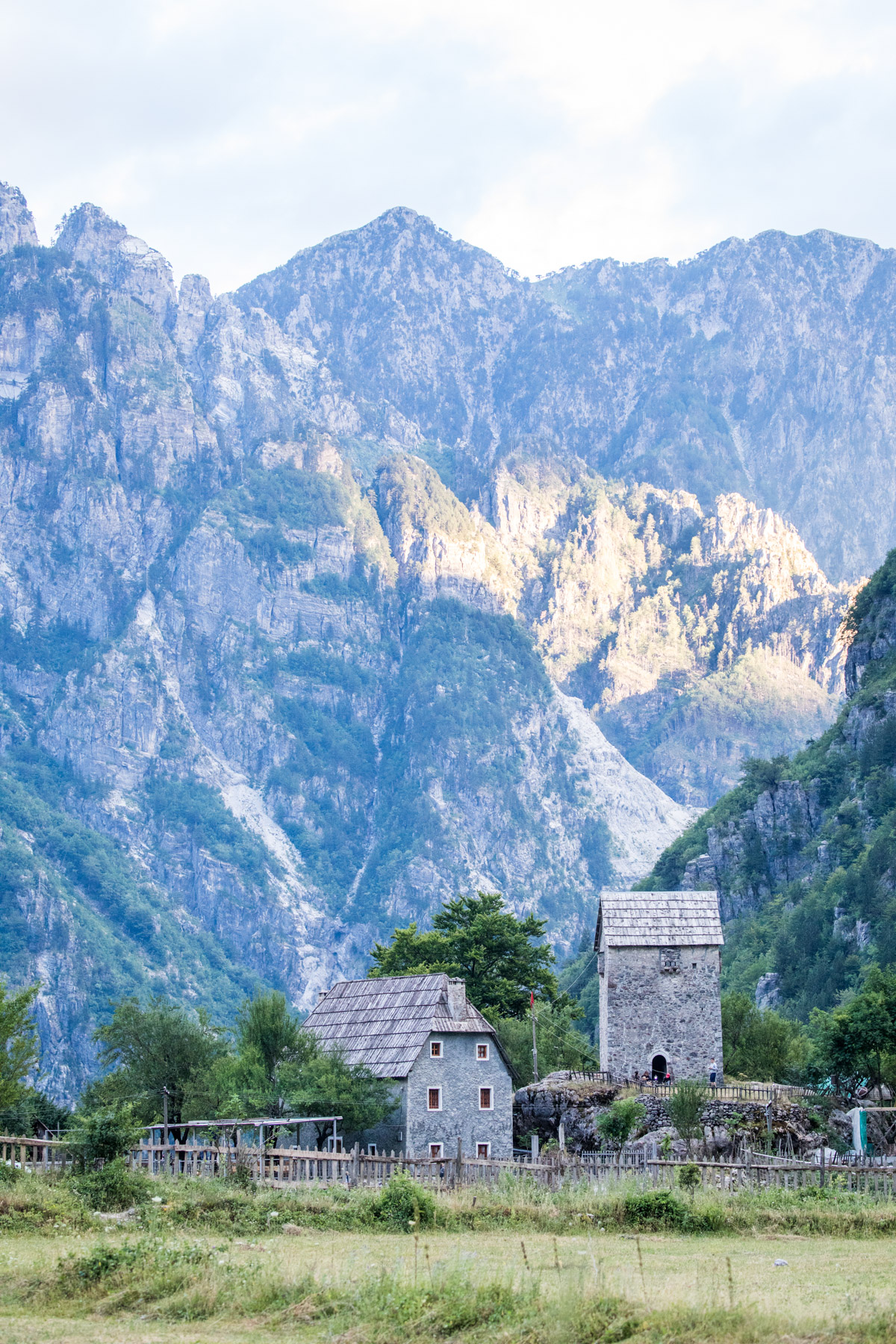
The area remained isolated for centuries, governed by local customary law known as the Kanun of Lekë Dukagjini. One of the most unique survivals of this era is the Kulla e Ngujimit — the “Lock-In Tower” — used historically for protection during blood feuds.
Theth is accessible via a single mountain road from the village of Boga.
The road has recently been paved and improved.
Winter accessibility remains limited (often impassable until April due to snow).
Transfers are available from Shkodër, Tirana, Valbonë, and other hubs.
Visitors typically arrive by:
✔ Private transfer
✔ Minibus (summer only)
✔ Organised tours
Theth now offers a growing range of places to stay:
Guesthouses
Small hotels
Hostels
Mountain lodges
Rooms range from simple shared accommodations to private rooms with en-suite bathrooms. Hospitality is genuine, food is home-cooked, and views are spectacular.
Theth National Park is surrounded by steep alpine walls and dramatic passes, including:
Qafa e Thores
Shtegu i Dhënve
Radohina
Peja Pass
Maja e Ali
Jezerca Basin
Maja e Zezë
Maja e Zorgjit
The region has long attracted climbers, botanists, geographers, and explorers.
Notable natural attractions include:
✔ Grunas Waterfall
✔ The Blue Eye (Syri i Kaltër)
✔ Shala River natural pools
✔ Nderlysaj rock tubs
Cultural landmarks include:
✔ The Catholic church
✔ The Lock-In Tower
✔ Watermills
✔ The Ethnographic Museum (House of Lulash Boshi)
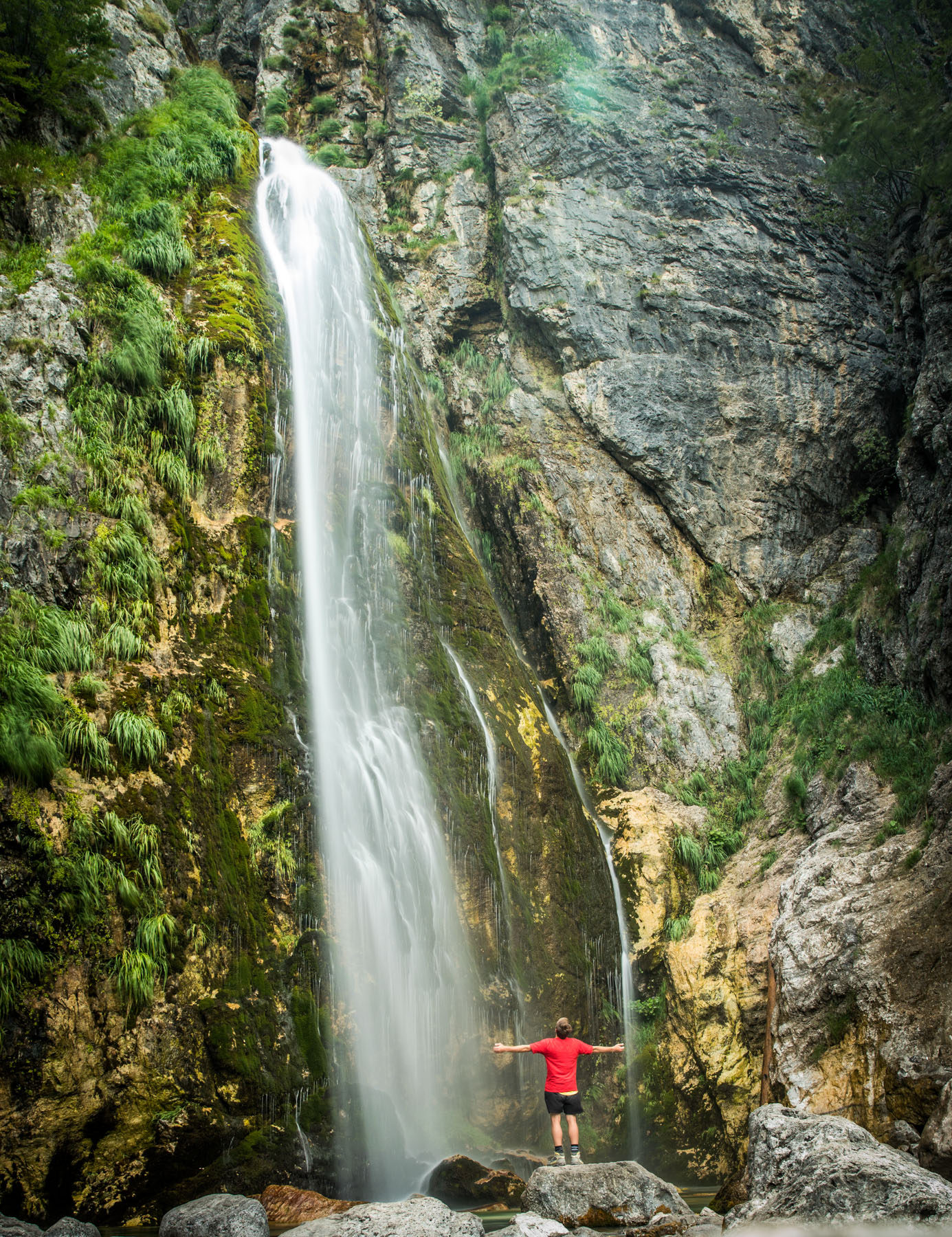
A classic hour-long hike through pristine forest. The 25-metre waterfall drops into a blue-green pool at the base of a limestone cliff. Strongest flow is in May–June.
2. Blue Eye of Theth (Moderate – 3 hours)
The Blue Eye is Theth’s most iconic natural feature — a deep natural spring with crystal glacial water so blue it appears illuminated. Tempting for swimming, but extremely cold.
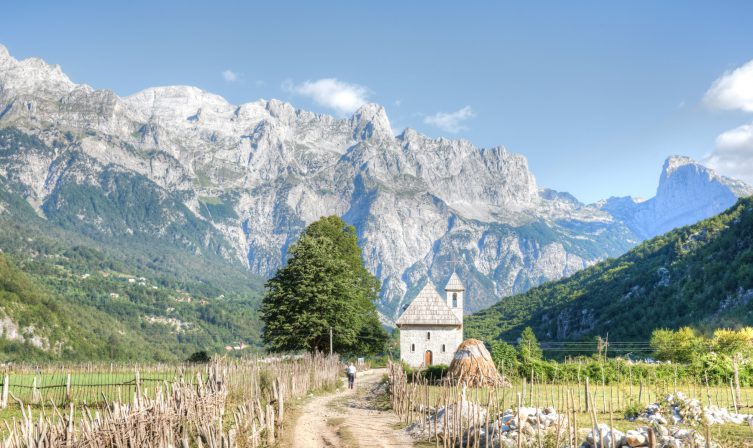
A serene white church surrounded by open meadows and framed by towering peaks.
4. Nderlysaj Natural Pools
Glacial rock formations carved by the Shala River, perfect for photos and cold dips.
A beautiful day hike to historical shepherd huts with excellent views.
Over 300 blood feuds were mediated here. This 400-year-old stone tower remains one of Albania’s most important cultural monuments.
Theth’s Catholic heritage is strong.
Father Shtjefën Gjeçovi opened the first Albanian-language school in 1917. The 1892 church still stands today.
Traditional stone architecture symbolizing the defensive lifestyle of highland families.
Fox
Chamois
Roe deer
Golden eagle
Vultures
Brown bear
Wolf
Lynx
Forests are dominated by Bosnian pine, beech, Macedonian pine, juniper, and alpine flowers such as edelweiss and gentian.
May–June: Best waterfalls, green landscapes, cool temperatures
July–August: Warm, stable weather
September–October: Fewer tourists, golden colors, colder nights
Winter: Not accessible without specialized gear
No ATMs — bring cash
Limited mobile coverage
Water is generally safe but consider filters during hikes
Navigation: use GPX files or a dedicated app
Respect local customs
Dress in layers — mornings and evenings are cold even in summer
Theth is a rare combination of nature, history, and living mountain culture. Its trails, waterfalls, church, and lock-in tower make it one of Albania’s most fascinating destinations — whether as part of the Peaks of the Balkans or as a standalone adventure.




Balkan Natural Aventure is leading tour oprator in the region. We were featured to major newspapers and hold a partner status with travelife certifier.
Links
Destinations
Locations
Balkan Natural Adventure Sh.P.K
Edit Durham, nr 7
30000 Peje, Republic of Kosovo
Balkan Natural Adventure Albania
Rr. Milto Tutulani nr 26/8
1010 Tirana, Albania