When an IFMGA-certified mountain guide from the United Kingdom visits the Peaks of the Balkans ski touring for the first time , expectations are naturally high. Martin Chester has guided extensively in the Alps and across Europe, so for him to call this journey “one of the most memorable trips” of his career says a lot about what winter in the Balkans truly offers.
Two years after joining us on a winter ski touring test loop, Martin still remembers the details of each day. That alone tells the story.
Our route started from Gacaferi Guesthouse and formed a loop across Kosovo and Montenegro, including nights in Hrid Guesthouse and Dobërdol. It was not just a ski trip. It was a full winter expedition combining ski touring, cultural immersion, remote mountain hospitality and constantly changing terrain.
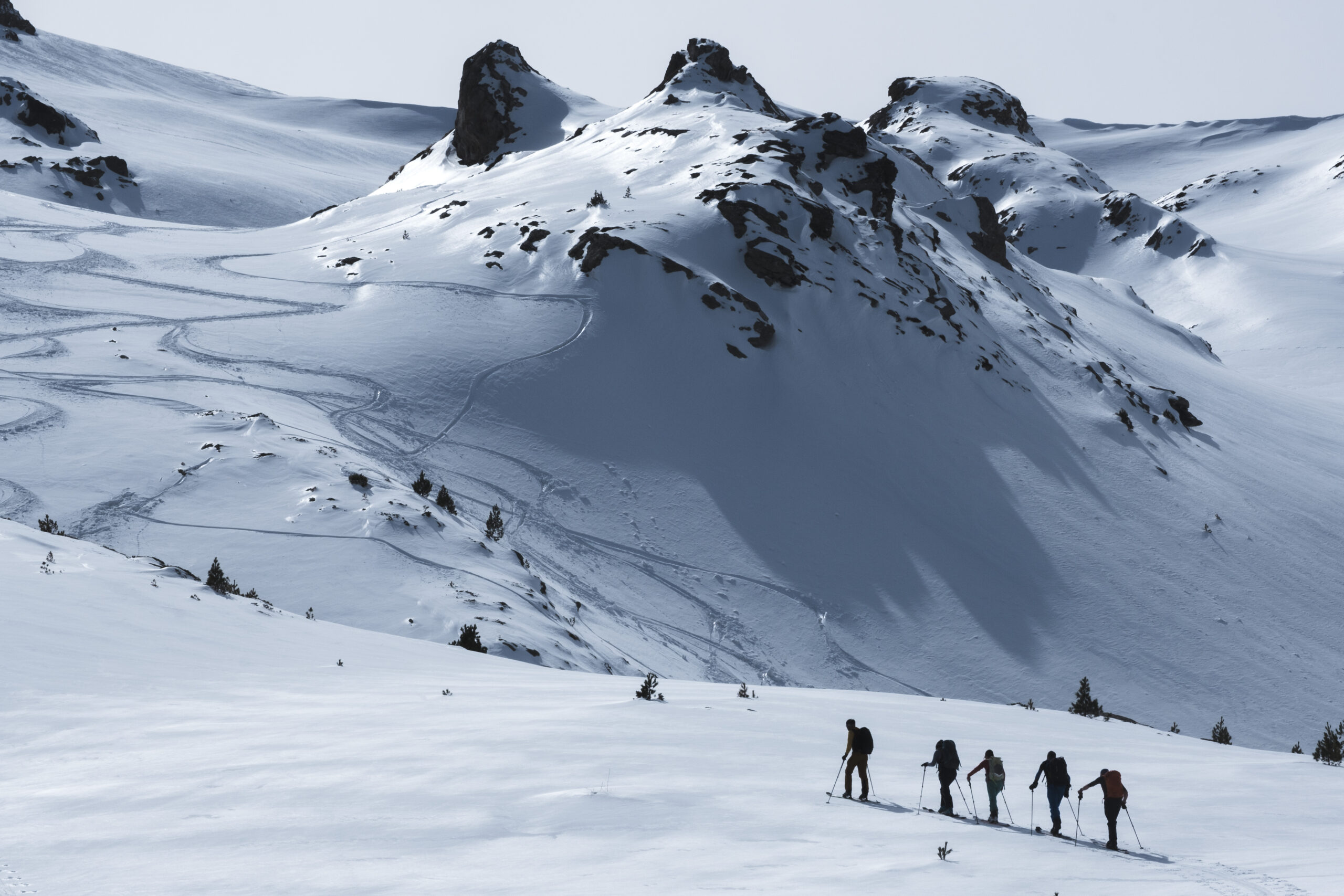
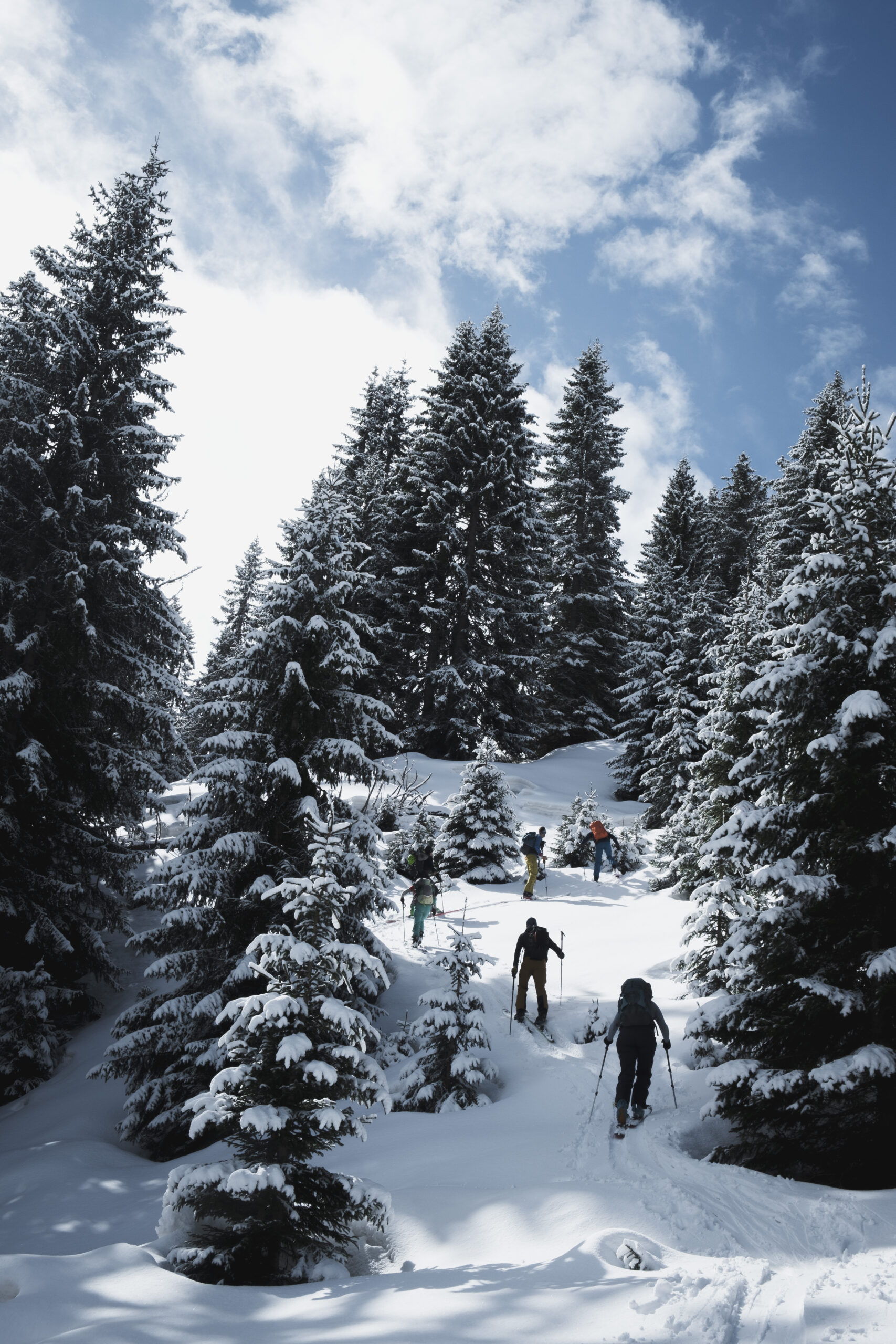
Martin compared the terrain to the southern Alps, like parts of Piemonte or Queyras: forested slopes, varied terrain, and options for both moderate and steeper descents. What impressed him most was that even in poor visibility, there were always visual references—trees, bushes, subtle terrain features—that made navigation manageable. Unlike high glaciated alpine terrain, the Peaks of the Balkans are non-glaciated, which simplifies logistics and reduces objective risk.
One key point he emphasized, about the Peaks of the Balkans ski touring, was the flexibility of the terrain. You can travel safely from one guesthouse to another without necessarily entering complex avalanche terrain, yet for stronger ski tourers, there are always steeper faces and additional laps available. On several days, instead of taking the shortest line from A to B, we added extra climbs and descents simply because the snow and terrain invited exploration.
Dobërdol left a particularly strong impression. In winter, it feels remote and wild, almost like a deserted mountain settlement. Yet inside the guesthouses, there is warmth, home-cooked food, and the kind of hospitality that defines the Balkans. Martin spoke about the contrast between the comfort of family-run lodges and the raw mountain environment outside. Even small details—like local herbal tea picked from dried mountain plants—became part of what made the experience memorable.
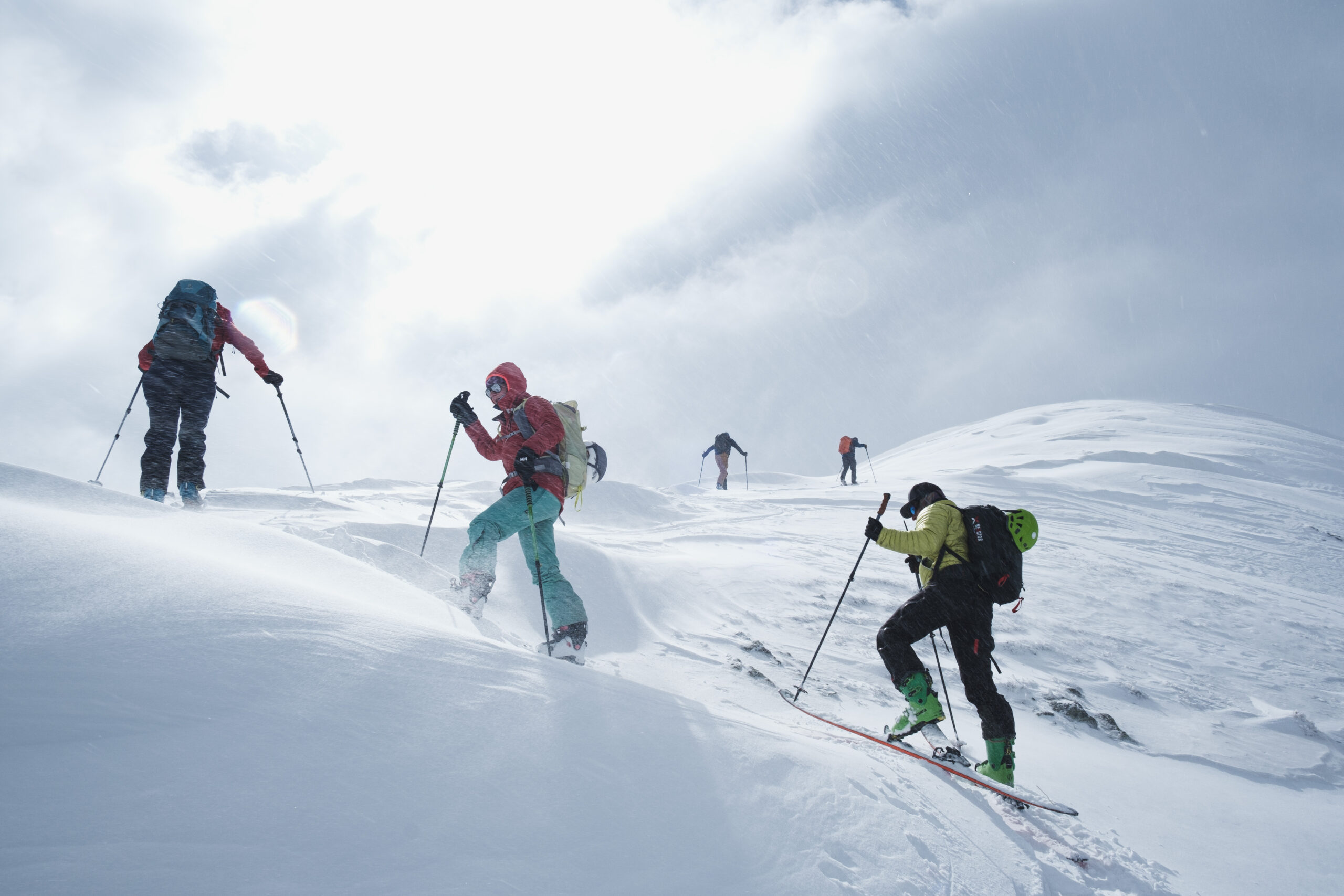
Of course, not every slope had perfect snow. In one valley, wind had stripped parts of the hillside. But that is ski touring in the modern era. As Martin put it, climate change has made snow conditions less predictable everywhere. What matters is the ability to adapt. On the opposite side of that same valley, we found some of the best snow he had ever skied.
He also noted that snow in the Balkans behaves slightly differently than in the Alps. Because the region sits further south, the sun angle is higher. South and east-facing slopes can transform quickly into stable spring snow, while shaded northern slopes can preserve cold powder. For a professional guide, this makes the terrain “honest” and readable. The snowpack evolves fast but predictably.
We also discussed the growing presence of cat-ski operations in the region. Martin believes in balance. Some valleys are suited to mechanized access, others are better preserved for pure ski touring. What makes the Peaks of the Balkans unique is precisely the feeling of freedom—moving on skins, choosing your line, and sharing vast landscapes with only a handful of other people.
An important takeaway from the conversation was that this region does not depend solely on perfect snow to succeed. Increasingly, international guides and travelers are looking for complete adventure packages. Cultural authenticity, remote hospitality, local food, and meaningful travel experiences are becoming just as important as snow quality.
Even if conditions are not ideal, the journey remains powerful.
For experienced ski tourers, the region is accessible without a guide, thanks to its non-glaciated terrain and relatively straightforward navigation between guesthouses. At the same time, guided trips allow for deeper exploration, steeper objectives, and local insight.
Two years later, Martin still recalls the details of each climb, each descent, each guesthouse. That is perhaps the strongest endorsement possible. The Peaks of the Balkans in winter are not just a ski destination. They are a complete mountain experience.




Balkan Natural Aventure is leading tour oprator in the region. We were featured to major newspapers and hold a partner status with travelife certifier.
Destinations
Locations
Balkan Natural Adventure Sh.P.K
Edit Durham, nr 7
30000 Peje, Republic of Kosovo
Balkan Natural Adventure Albania
Rr. Milto Tutulani nr 26/8
1010 Tirana, Albania