The Peaks of the Balkans is one of Europe’s most spectacular long-distance trails, but like all alpine environments, it requires awareness and responsible behavior. Below is an overview of the main risks hikers should know before starting their journey.
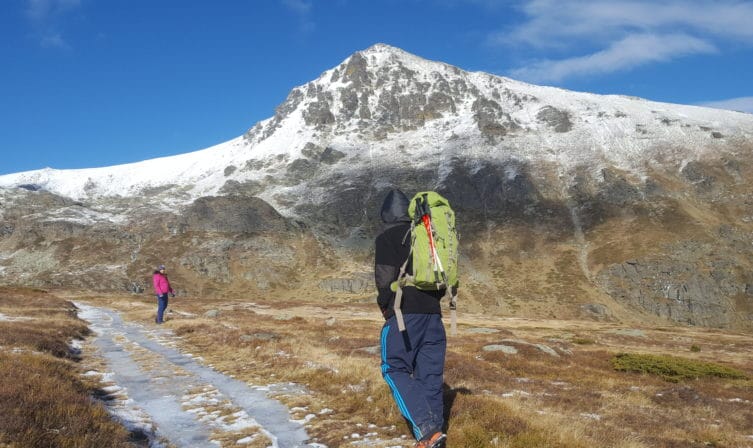
Snow can remain on high passes until early June, and it can return as early as October. The most sensitive and dangerous point is the Valbona–Theth Pass, where several accidents — including fatalities — have occurred in past years. These incidents typically involved hikers:
unfamiliar with steep alpine snow
wearing running shoes instead of mountain footwear
attempting to cross snowfields without poles
ignoring warnings from local guides
On Valbona–Theth, even a small snow patch becomes extremely risky due to the steep terrain and the rocky slopes below. A slip can become uncontrollable.
Essential advice:
If you see snow, stop and evaluate before continuing.
Consult professionals or local guides if unsure.
Consider using the winter trail, but only after coordinating with a guide or responsible mountain company.
Never cross snow slopes without proper boots and poles.
If conditions feel unsafe, turn back immediately.
Every year, a number of hikers experience vomiting, diarrhea, stomach cramps, and fatigue. Based on reports collected from the field, 2023 was the worst year, while 2024 and 2025 showed significant improvement.
One suspected cause is norovirus, a highly contagious gastrointestinal virus present worldwide. However, as Dr. Burim Kotori of the Center for Water Quality in Peja explains, it is not possible to confirm the exact source without laboratory testing, and many similar viruses can cause the same symptoms.
Wash hands thoroughly with soap and water for at least 20 seconds.
Use hand sanitizer only as backup (it is less effective against norovirus).
Avoid touching your mouth with unwashed hands.
Drink purified or boiled water; use purification tablets when unsure.
Be careful with buffets or shared serving utensils in crowded locations.
Do not play with stray animals
Most cases resolve in 1–3 days, but dehydration is the biggest concern. Rest, fluids, and rehydration salts are essential.
A large number of injuries on the trail happen not because of difficult terrain, but because hikers accidentally trip or slip while distracted.
Many people try to record video or take photos while still walking, especially on the Valbona–Theth and Dobërdol–Montenegro ridgelines. Uneven rocks, loose gravel, or wet roots can cause sudden falls.
As experienced Peaks of the Balkans guide Mentor Vokshi advises:
“Always stop before you take photos or video. Watch where you place your feet first.”
This simple habit prevents many avoidable accidents.
Safety tips:
Stop moving before using your phone or camera.
Look at the ground ahead, especially on steep or rocky sections.
Use trekking poles for stability.
Avoid filming on descents or on wet terrain.
The trail is moderate to difficult, not technical.
Snow is the biggest environmental risk in early/late season.
Illness risk has decreased since the peak year of 2023.
Hygiene, clean water, and attention to footing are essential.
Guides can prevent many problems and provide safety backups.




Balkan Natural Aventure is leading tour oprator in the region. We were featured to major newspapers and hold a partner status with travelife certifier.
Destinations
Locations
Balkan Natural Adventure Sh.P.K
Edit Durham, nr 7
30000 Peje, Republic of Kosovo
Balkan Natural Adventure Albania
Rr. Milto Tutulani nr 26/8
1010 Tirana, Albania